Inquiring Minds III (Borneo) – Mark of the Spider

Without Borneo, there would be no Mark of the Spider.

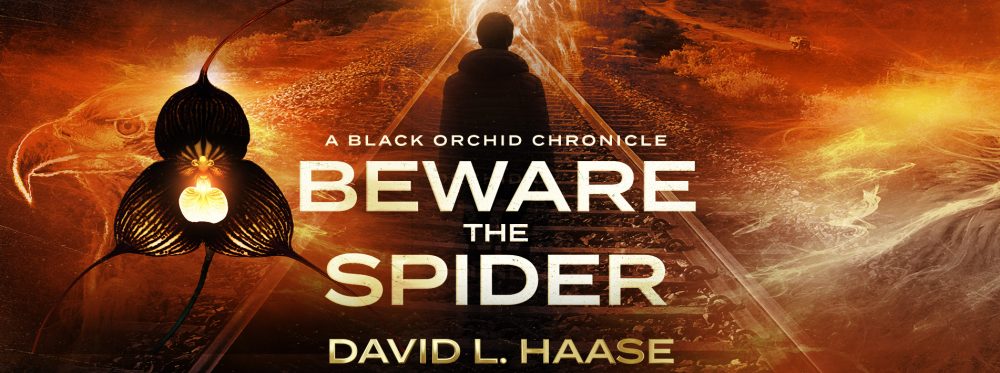
My supernatural suspense novel, the first of the Black Orchid Chronicles, follows nature photographer Sebastian Arnett, who is cursed with the power to kill with his thoughts but has no control over this lethal ability.

That curse had to come from somewhere, and I wanted a location far from the American experience in time, distance and culture. The more remote, the better. And if it was still wild, or at least untamed, even better still.

After all, the guy is going to think of people dying — as we have all done from time to time — and THEY DIE! That’s outside the normal American experience.

The opening location in the book also needed to have orchids, lots and lots of orchids. I call the series The Black Orchid Chronicles for a reason.

Worldwide, there are about 28,000 species of orchidaceae. And Borneo alone has about 1,500 species. That ought to keep a nature photographer busy for a few months documenting all those flowers for a wealthy Middle Eastern patron.

Sounds like my kind of place.

One Island, Three Nations

So, Borneo, orchids, native tribes, headhunters and demons.

The island is the third largest in the world, after Greenland and New Guinea. (Australia swamps them all, but is considered an entire continent rather than just an island.)

Still, Borneo is big enough to house (parts of) three different nations — Indonesia, Malaysia and Brunei.

Much of the action in The Mark of the Spider takes place in the Malaysian section in the north and northeast. Rural towns with names like Kota Kinabalu and Tenom host some tense scenes, and the book opens in Taman Pertanian Sabah, the Sabah Agriculture Park, with its collection of hundreds of native Bornean orchids.

As in other resource-rich parts of the under developed world, outside forces imperil the orchids and the people who live among them. Illegal logging, fires and forest damage have reduced the natural habitat of many species, and gold mining and illegal burning has led to the extinction of hundreds of orchid species.

In his travels into the Heart of Borneo, Sebastian has a fateful encounter with Dyak tribesmen. More than 200 ethnic subgroups living along the rivers and in the mountains of Borneo, each with its own dialect, customs, laws, territory and culture, make up the Dyak (also spelled Dayak).

One ancient Dyak woman presents him with a black orchid, starting a chain of events that will have Sebastian running for his life.

Borneo. Cool place. A lot happening there. Check it out.


The Mark of the Spider, Book 1 of the Black Orchid Chronicles, is available from Amazon in digital and trade paperback (5.5 x 8.5″, 334 pp.) formats.
Enjoy it today; review it tomorrow.
Inquiring Minds II (Black Orchid) — Mark of the Spider

At the beginning of the adventure chronicled in The Mark of the Spider, the protagonist, nature photographer Sebastian Arnett, would definitely say, There is no such thing as ghosts. Or demons. Or a true black orchid.

You’ll have to read the book to see whether he changes his mind about the demon thing. He will never change his mind about black orchids, however.

‘Cause there ain’t no such thing as a black orchid.

There is a Black Orchid perfume. A Black Orchid comic book character. A double mystery by Rex Stout. A Black Orchid movie starring Sophia Loren and Anthony Quinn and an earlier one from 1953.  There are Black Orchid music albums and an Australian goth band.

But no black orchid flower.

As Celeste Booth notes on the OrchidPlantCare.info Web site:

There are two shades, however, that orchids do not naturally blossom in: a true blue or a true black. They simply do not have the genetic makeup to make these pigments. There are some varieties of purple orchids that look very blue, but upon close inspection are really a shade of purple. Similarly, black orchids have an extremely rich pigmentation that looks almost black but is not a true black color.

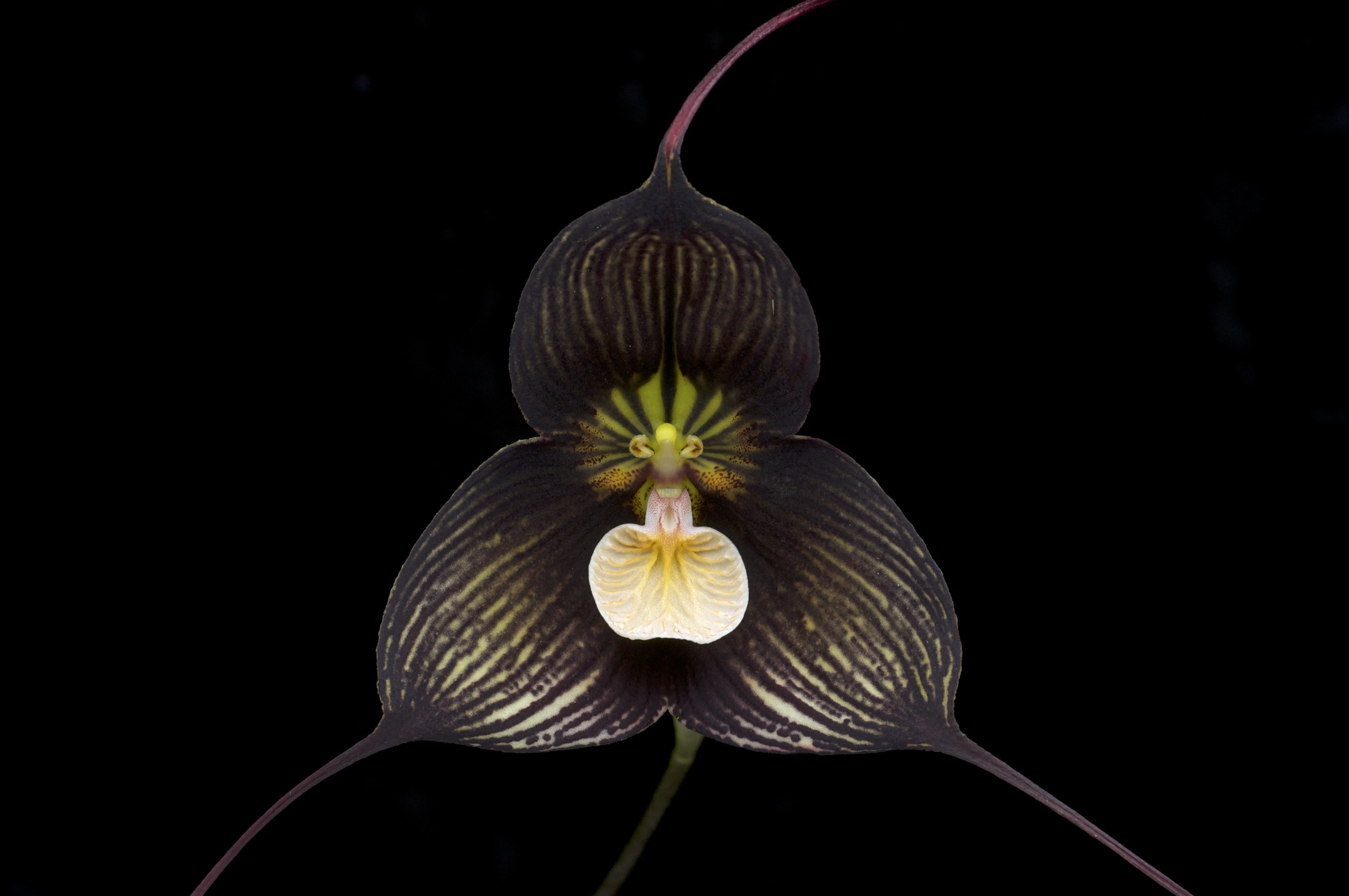
So what’s that black orchid pictured on the cover of The Mark of the Spider?

Dracula vampira orchid. Photo: Eric Hunt

It is a deep purple bloom of the Dracula vampira species. And how cool is the name?

I sent several photos of dark (but not black) orchids to my book designer (Damon Freeman of Damonza.com), and he liked this one best. I agree.

What drew me to the idea of a black orchid?

Obviously, it’s not original to me. Black connotes something dark, mysterious, potentially dangerous. And orchids are complex, incredibly beautiful plants. The two words combined — black orchid — convey the dangerous allure that I needed to entice my protagonist into doing something he normally would never do.

And since I plan to write more than one Sebastian Arnett adventure, I wanted an intriguing name for the series. Black Orchid was an obvious candidate, and my son suggested that the series be chronicles.

And so they are, the Black Orchid Chronicles.


Order your copy of The Mark of the Spider: A Black Orchid Chronicle from Amazon today and start enjoying.

Inquiring Minds I (Spiders): Mark of the Spider

The-mark-of-the-spider-bookmark_front

The mark of a spider? Big red bump obviously.

Or not. (Look at the cover of my Mark of the Spider.)

But which spider left its mark? I mean, what kind of arachnid?

This question arose (over and over and over again) as I wrote The Mark of the Spider.

A black widow (Latrodectus mactans)? Everybody knows this is the deadliest spider ever. (Except it’s probably not. It’s in the top ten, but likely not the most dangerous.)

A tarantula (spider family Theraphosidae)? Every horror movie uses these nasty looking creatures, but they rarely rank among the ten most dangerous. (See here, here, here and here.)

A Digression

In general, among the 43,000 species of spider throughout the world, the ones to avoid have funnel, recluse, widow or wolf in their names. So the black (and other) widow spiders are nasty brutes, as you would expect with a name like widow.

Depending on your source, these are the most dangerous, venomous spiders in the world.

For my money, the nastiest looking is the Goliath Birdeater Tarantula (Theraphosa blondi), which is about the size of a dinner plate. This is it:

blondilocust1 copychidsweb_thumb

Goliath Birdeater, which is about the size of a dinner plate. Photo: Wonders World.

Imagine what it would look like in person, if it were black — and 10 feet tall.

But I digress.

BOT (Back on Topic)

My spider is black with hairy legs. It has no eyes, that I can see, and it is tiny enough to crawl unnoticed into a human ear and large enough to imprison a tall man inside its telephone pole-sized legs. And angry. Very angry. And vindictive.

That’s my spider.

I couldn’t find that in nature. So, the spider in The Mark of the Spider exists in my mind, and yours. That should make you shudder.


The Mark of the Spider, Book 1 of the Black Orchid Chronicles, is available on Amazon in digital and trade paperback (5.5 x 8.5″, 334 pp.) formats.

Enjoy it today; review it tomorrow.