12 Common Writing Mistakes

I came across this post from BookBub that identifies twelve writing mistakes that even old hands and best-sellers make.

Reading it was like being at my monthly writers group meeting. So, yeah, everyone makes these mistakes. I have, my colleagues have, and now I’m told that so do the best of us.
My Three Biggest Mistakes In Prepping For The GMAT Exam

It’s written by Ricardo Fayet, co-founder of Reedsy, which sells editing, design and marketing services to authors. Here’s the start:

Have you ever bought a New York Times bestseller and found a typo or a glaring mistake? It’s happened to most of us. Writing mistakes can detract from the overall impression of quality readers expect of a published book. This can lead to negative reviews and low ratings, which can have an undesirable impact on sales.

The occasional error is practically inevitable in a finished manuscript, but striving for perfection is still a worthy aim. Understanding the most common mistakes can help authors approach their work and editing process with more clarity — and keep them from stumbling on common pitfalls.

At Reedsy, we work with experienced developmental editors, copy editors, and proofreaders. I asked them a simple question: “What’s the most common writing mistake you see even bestselling authors making?” You’ll find their answers below, from big-picture mistakes down to the nitty-gritty of grammar and punctuation.

Read the entire post at BookBub.


And while you’re at it, get a copy of my new novel, The Mark of the Spider, which is available from Amazon.

Buy the print copy and get the email copy free!

Still not convinced? Here’s what some readers say about it.

Mark of the Spider: What Readers Say

Here is what some readers are saying about The Mark of the Spider: A Black Orchid Chronicle.

The-mark-of-the-spider-bookmark_front

“A captivating and easy to read book … I didn’t want it to end….”


“Once you start you don’t want to put down. Full of intrigue!”


“My only disappointment was that the second book hasn’t been released yet! I want more!”


“Breathless”


Not sure if that last one describes the book or the reader, but either way, I like it.

If you’ve read it and liked it, please say a few words about it on Amazon or Goodreads.

If you haven’t gotten the book yet, do it now. I hear it’s “breathless.”

The Mark of the Spider is only available on Amazon until mid-November when it will be available through most ebook sellers. Stay tuned.

Inquiring Minds (Pilatus Porter) – Mark of the Spider

Pilatus Porter.

Nope. Not the prefect of Judea from the New Testament.

It’s an airplane. One I’ve actually flown in, and one that nature photographer Sebastian Arnett ventures forth in my new book, The Mark of the Spider.

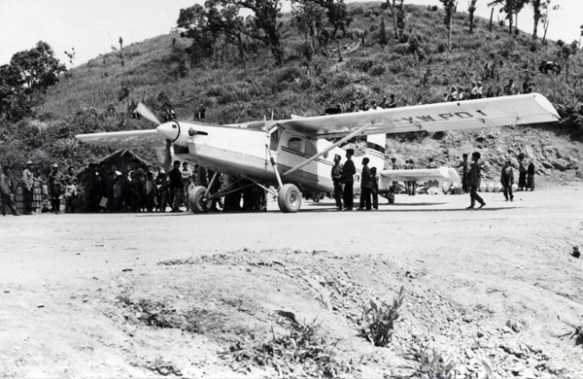
I flew in the Porter back during the Viet-Nam War. Back then, it was a favorite short takeoff and landing (STOL) aircraft for the CIA throughout Indochina — as was the snub-nosed Helio Courier.

Air_America_Porter_01

Pilatus Porter in Laos, ca. 1970. Photo: Dr. B.R. Lang, Wikimedia Commons.

In Laos, where I spent most of my time in Southeast Asia, the Porter’s missions included “paradropping supplies to troops, passenger transport, psy ops, reconnaissance, prisoner conveyance, airborne radio relay, and other intelligence operations.”

The Porter has a wide wingspan compared to the length of its fuselage (52 feet vs. 36 feet), a distinctive long nose, and a powerful reversible engine that allowed it to land in three airplane lengths (about 110 feet), or two-thirds of the width of a football field. Takeoff required slightly more.

It was quite uncomfortable to fly in as a back seat passenger, quite exciting and far too much like flying in nothing at all, as in there’s nothing under me — or free fall.

And, as Sebastian discovered in The Mark of the Spider, the plane could glide long distances without its engine on.


You can read all about Sebastian’s adventures in trade press print and ebook formats, only from Amazon.