The research and prep work are done.
You’ve got your outline.
Now you write.
You can start anywhere you like, but I think the beginning is a better place than most. I don’t mean the day you were born. I mean the beginning you chose in your outline. ;INK
This a memoir, not an autobiography. An autobiography covers your entire life and really does start at the very beginning. Your memoir is focusing on part of your life.
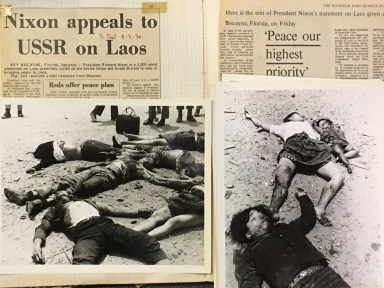
One of my clipping books: Reasons to write.
Use all your senses to tell your story. How you felt. Sure. But what did you see? Hear? Smell?
Keep your eye on the conflict. If this was important enough to write about, identify the conflict and keep it in mind, and on the page.
Wrap it up with a satisfying ending. Doesn’t have to be happy. But it has to address and resolve the conflict somehow.
Along the way, use quotations. Journal entries. Letters. News clippings.
Given my decades as a journalist writing every day and several years of writing 2,000 words of fiction a day, I thought I could knock out a first draft of a 75,000-word manuscript in two months with a little weekend work. Wrong. It took five months.
Be flexible about your deadlines, but by all means set a goal for yourself.
After you finish, go back and revise it. Start to finish. Spellcheck. Grammar check. Does everything make sense? Is everything consistent? Did you have any questions? If you did, you can bet your readers will, too. So answer them.
After your first revision, pass it around to anyone who will read it. Get real reader feedback. You don’t have to take the advice you get, but you should hear it and consider it. Someone cared enough to make suggestions; they deserve a respectful hearing.
I was lucky enough to have more than a dozen people – family, friends and my writers group – review all or parts of the memoir. After the first revised draft, I did two complete rewrites with uncounted numbers of revisions.
So you should plan to rewrite and repeat. Expect it to take a while.
Have fun. Life is short. Good luck.
 The photo is a snapshot of two pages from one of my clipping books. It shows other pix of ambush victims in Laos in the early 1970s.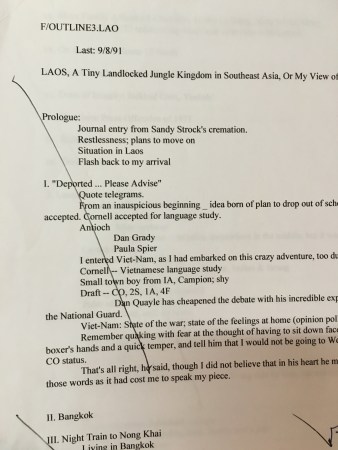
 David L. Haase